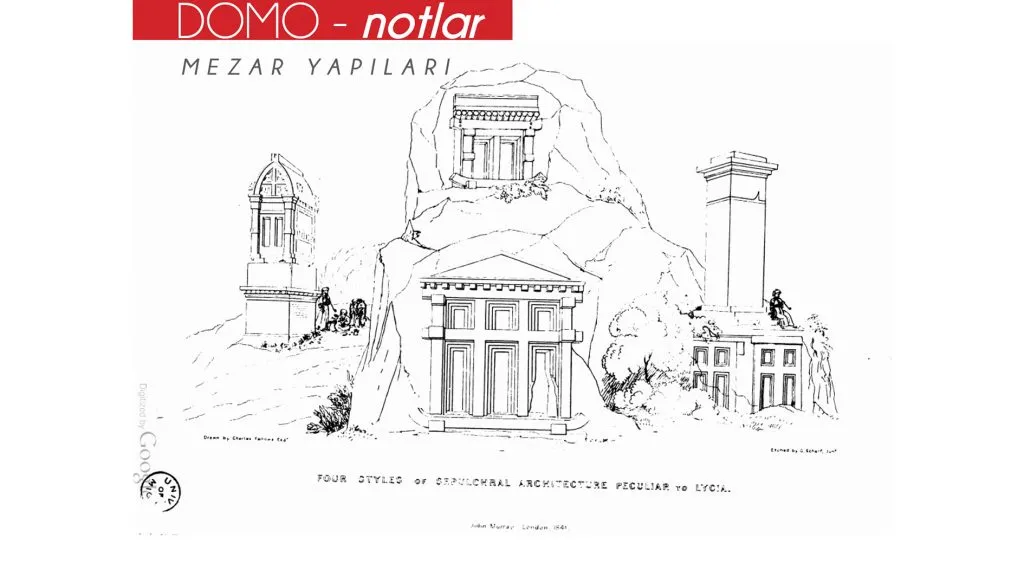
The most important buildings of the Lycian region to have survived to this day are tombs, and they were generally built on a monumental scale. The importance given to building tombs in Lycia is a clear sign of the weight the people of the region gave to the “CULT OF ANCESTORS”. Apart from the Letoon sanctuary, there are very few temples in the other Lycian cities — and the temples of Leto, Apollo and Artemis at the Letoon were themselves built after the 7th–8th century BC. Taking this together with how few temples the other Lycian cities have, we can suggest that the temples at the Letoon may have been built under Greek and Roman influence. This shows that, at least in the early periods, the cult of ancestors mattered to the Lycians, and it also gives clues as to why they may have made their tombs monumental. (Research has shown that the tomb structures counted among the original Lycian buildings of the region predate the Hellenistic period.) Three main influences can be identified in Lycian tomb architecture:
• Greek• Near Eastern
• Local
Within this framework, we can say there are four types of tomb in Lycia: pillar tombs, sarcophagi, rock-cut tombs with house façades and rock-cut tombs with temple façades.
Our notes on Lycia grew a little with every project, one addition after another, until they became a booklet.
Our notes, presented with their sources, are now published!